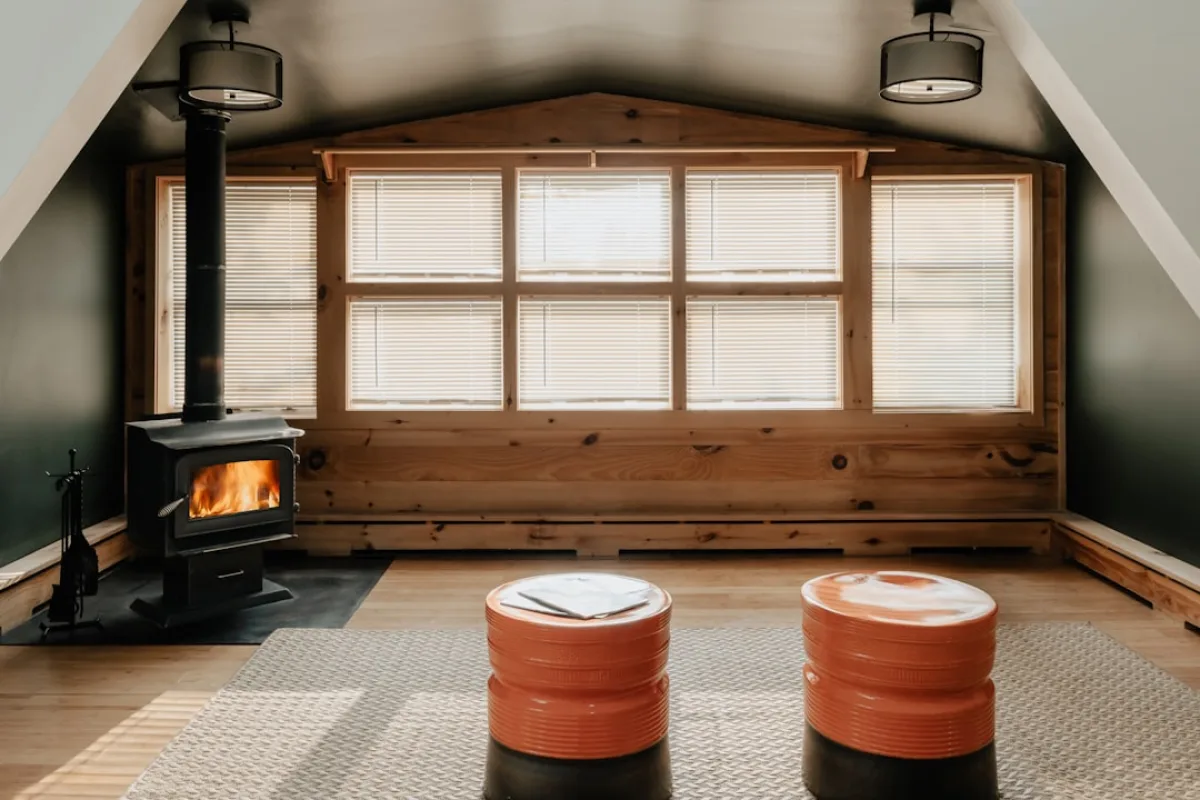
Choosing a Wood Burning Stove for a Small Living Room
Colin Whitmore · 22 Aug 2026
A wood burning stove can transform a small living room, adding genuine warmth and a focal point that no radiator can match. The key is choosing a model that suits the room rather than one that simply looks good in a showroom. Get the output wrong and you will either be shivering through winter or flinging the windows open in February. Our team installs stoves in compact homes across the UK every week, so we know exactly what to look for.
Start With the Heat Output
Heat output is measured in kilowatts (kW), and choosing the right figure for your room is the single most important decision you will make. Too high and the stove will be cranked down permanently, which causes tar and creosote to build up in the flue. Too low and you will never feel the benefit.
A rough guide is to allow roughly 1 kW of output for every 14 cubic metres of room volume, though this varies depending on insulation quality, window size, and ceiling height. For a typical small living room measuring around 3.5 m x 4 m with a standard ceiling, a stove in the 4 kW to 5 kW range is usually more than sufficient. Many of our customers in older terraced houses or compact modern homes are surprised at how much heat a 4 kW stove produces.
If you are unsure how to calculate your room volume or factor in insulation, our team can work through this with you before recommending a model. You can find out more about what that process involves on our stove supply and installation page.
Physical Size and Proportions Matter Too
Beyond the output figure, the physical footprint of the stove needs to work within your room. A large stove in a small room will feel oppressive and may create clearance problems that affect building regulations compliance. Equally, a stove that is too small for its alcove or fireplace opening will look lost and out of place.
Our installers always measure the available space carefully before recommending a specific model. There are several compact stove designs on the market now that deliver strong heat output from a modest casing, which makes them well suited to smaller rooms. Slimline models can be particularly useful where the hearth area is tight.
Hearth size and clearance distances are set out in building regulations, and they affect which stoves can realistically be fitted in a given space. Our fireplace and hearth fitting service includes ensuring everything meets those requirements, so you do not need to worry about navigating the rules yourself.
Flue and Chimney Considerations for Compact Homes
Smaller homes, particularly Victorian terraces and modern new builds, often present flue challenges. Narrow existing chimneys frequently need lining to meet current standards and to ensure the stove draws properly. Without a correctly sized and lined flue, even a well-chosen stove will underperform and may produce smoke in the room.
Our team carries out chimney surveys before any installation to establish what work is needed. In many small homes we install a flexible stainless steel liner, which improves draw and dramatically reduces the risk of condensation and tar build-up. You can read more about what this involves on our chimney lining and flue page.
If your property is in a smoke control area, you will also need a DEFRA-exempt appliance. These stoves are approved for use in urban and restricted areas and burn wood more cleanly. We will always confirm your smoke control status before recommending a model.
Efficiency Ratings and Fuel Choice
Modern wood burning stoves must meet Ecodesign 2022 standards, which means they are significantly cleaner and more efficient than older models. For a small room, high efficiency is a genuine advantage because the stove produces more usable heat from less fuel, so you are not constantly feeding it to maintain temperature.
Most of the stoves we supply and install are rated at 75% efficiency or above. Running a stove at its proper operating temperature rather than smouldering at low output helps maintain that efficiency and keeps the flue cleaner over time.
Fuel choice also plays a role. Dry, seasoned or kiln-dried hardwood logs are the best option for wood burning stoves. Wet or unseasoned wood produces far less heat and far more smoke and residue. We always advise customers to use logs with a moisture content below 20%, which you can check with an inexpensive moisture meter.
Getting a HETAS-Certified Installation
Whatever size of stove you choose, it must be installed by a HETAS-registered engineer. HETAS is the official body that certifies solid fuel heating systems in the UK, and using a registered installer means the work is self-certified to building regulations without the need to separately notify your local authority.
All of our installations are carried out by HETAS-registered engineers and you receive a certificate of compliance on completion. This is important not just for safety but for home insurance and any future property sale. You can learn more about what that certification covers on our HETAS certification page.
What to Ask Before You Buy
- What is the heat output in kW? Make sure it matches your room volume, not just the room area.
- What is the external casing size? Check it will fit your hearth and leave adequate clearance distances.
- Is the stove DEFRA-exempt? Essential if you are in a smoke control area.
- Does it meet Ecodesign 2022 standards? All new stoves we supply do.
- What flue diameter does it require? This needs to match or be compatible with your existing chimney or liner.
- What is the door glass size? Larger glass panels give a better view of the fire in a small room, which adds to the atmosphere.
If you have questions that are not covered here, our frequently asked questions page covers a wide range of topics, or you can get in touch with our team directly and we will be happy to talk through your specific situation.
Related advice
Stove Output, Fuel and Compliance: A Practical Guide for Business Owners
From calculating the right heat output for your commercial space to understanding HETAS regulations and clean air zone rules, here is what every business owner needs to know before installing a wood burning stove.
24 Sep 2026
Read More
How to Create a Cosy Atmosphere in Your Commercial Space with a Wood Burning Stove
A well-chosen and correctly installed wood burning stove does far more than heat a commercial space. It shapes how guests feel the moment they walk through the door. Here is how to get it right.
23 Sep 2026
Read More
Firewood for Hospitality Venues: Fuel Quality, Storage and Keeping Supply Consistent
Running a pub, restaurant or hotel with a wood burning stove means thinking carefully about fuel. Here is our practical guide to choosing the right firewood, storing it properly and keeping your supply reliable all year round.
20 Sep 2026
Read More