What Our Installers Check Before Fitting Your Wood Burning Stove
Colin Whitmore · 23 Aug 2026
Getting a wood burning stove fitted is an exciting moment for any homeowner, but the work that happens before installation day is just as important as the fitting itself. Our installers carry out a thorough assessment of your home before anything is ordered or booked in. This helps us avoid surprises on the day and makes sure your stove performs safely and efficiently for years to come.
Assessing Your Chimney and Flue
The chimney is the first thing our team looks at. A stove is only as good as the flue system behind it, and we need to know what we are working with before we recommend a model or book an installation date.
We check the height and diameter of the existing flue, look for any signs of damage or blockage, and assess whether the draw is likely to be sufficient. A poor draw causes smoke to spill back into the room rather than rising up and out, which is both unpleasant and unsafe.
In many older UK properties, the chimney liner is either missing or no longer suitable for use with a wood burning stove. Where that is the case, our team will recommend a chimney lining and flue installation to bring everything up to the required standard. A correctly sized flexible steel liner not only improves draw but also reduces the build-up of creosote, which is one of the leading causes of chimney fires.
We also take the local area into account. If your property falls within a smoke control zone, you are only permitted to burn approved fuels or operate a DEFRA-exempt appliance. Our team will confirm your status and help you choose a stove that is fully compliant.
Choosing the Right Stove for Your Space
Once we know your chimney is suitable or have a plan to make it so, we turn our attention to the stove itself. Selecting the right model for your room is not simply a matter of picking something that looks good. Output, efficiency rating, and fuel type all play a part.
As a rough guide, you need roughly 1kW of heat output for every 14 cubic metres of room volume, though factors such as insulation levels, ceiling height, and the number of external walls will all influence that figure. We work through this with you so you end up with a stove that heats your room comfortably without running too hot or too cool.
We also discuss fuel preference at this stage. A dedicated wood burning stove is optimised for logs, while a multi-fuel stove gives you the option of burning smokeless coal as well. Both have their merits depending on how you plan to use the stove and what fuel you can source locally.
Hearth, Fireplace, and Building Regulations
Building regulations in England and Wales set out specific requirements for hearth size, stove clearances, and the structural integrity of any fireplace opening. Our installers know these requirements inside out and will flag anything that needs attention before the installation goes ahead.
If your room does not already have a suitable hearth, or if the existing hearth is too small or too thin for the stove you have chosen, we can arrange fireplace and hearth fitting as part of the same project. Getting this right matters both for safety and for satisfying building control requirements.
In most cases, a new stove installation must be notified to your local authority under Part J of the Building Regulations. When our installers are HETAS registered, they can self-certify the work on your behalf, meaning you receive a certificate of compliance without needing to involve building control separately. You can read more about how this works on our HETAS certification page.
Carbon Monoxide Detection
Before we leave any installation, we make sure a working carbon monoxide alarm is in place in the same room as the stove. This is not optional. Carbon monoxide is colourless and odourless, and a functioning alarm is your primary line of defence if combustion gases were ever to escape into the room rather than travelling up the flue as intended.
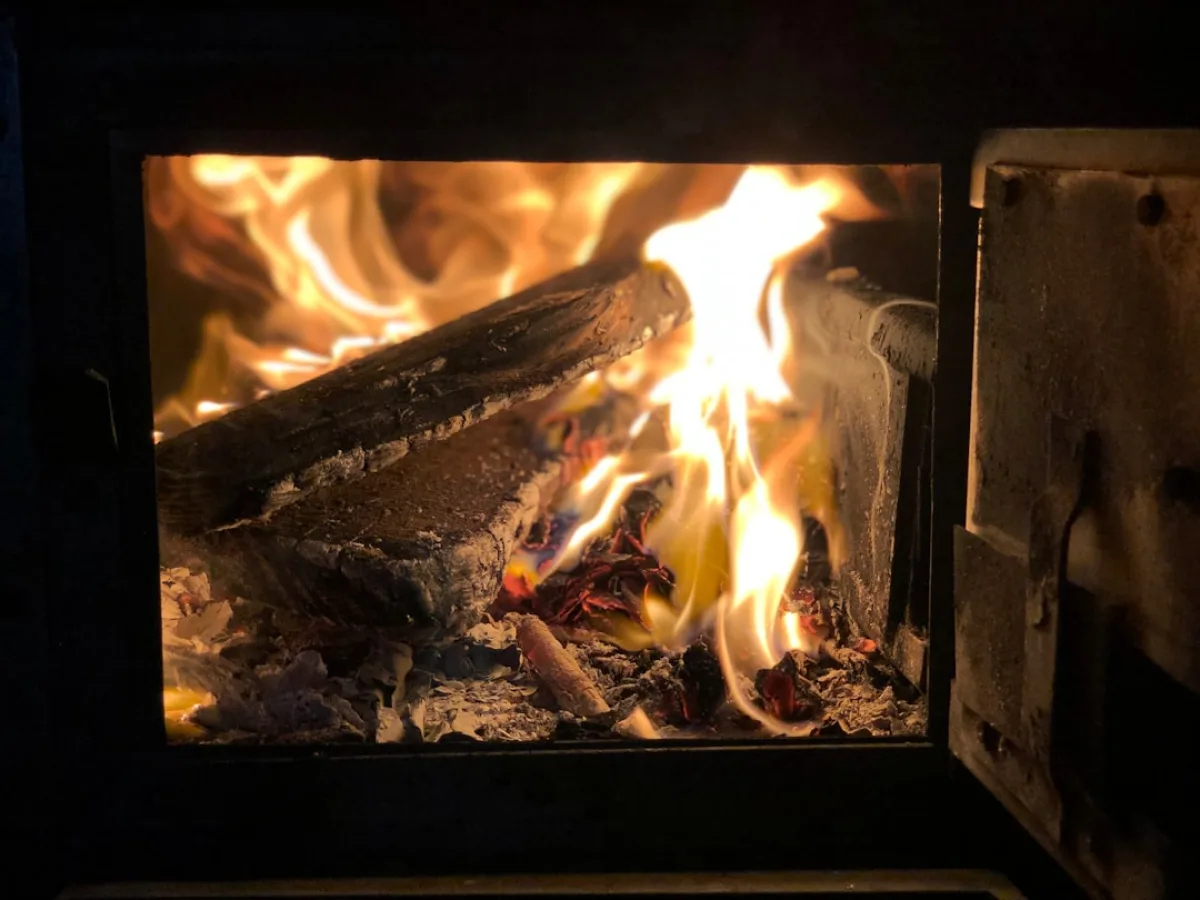
We recommend audible alarms that meet British Standard EN 50291 and advise positioning them at breathing height, away from windows and doors. We will also talk you through the basic signs that your stove may not be drawing correctly, such as sooty marks around the door seal or a flame that consistently burns orange rather than bright yellow or blue at the base.
What Happens on Installation Day
With all the preparatory checks complete and the right stove selected, installation day is typically a straightforward process. Our team arrives with the stove, liner, register plate, and all associated fittings. We protect your flooring and surrounding area before any work begins, run the liner down from the top of the chimney, connect everything up, and commission the stove with a test burn.
We walk you through how to operate the stove correctly, including how to light it efficiently, how to control the air vents, and what to burn during the initial curing period while the paint and seals settle in. We also explain when to book your first service, which we recommend after the first full season of use.
If you would like to find out whether we cover your area, take a look at our locations page for a full list of the regions our team works across.
Related advice
Stove Output, Fuel and Compliance: A Practical Guide for Business Owners
From calculating the right heat output for your commercial space to understanding HETAS regulations and clean air zone rules, here is what every business owner needs to know before installing a wood burning stove.
24 Sep 2026
Read More
How to Create a Cosy Atmosphere in Your Commercial Space with a Wood Burning Stove
A well-chosen and correctly installed wood burning stove does far more than heat a commercial space. It shapes how guests feel the moment they walk through the door. Here is how to get it right.
23 Sep 2026
Read More
Firewood for Hospitality Venues: Fuel Quality, Storage and Keeping Supply Consistent
Running a pub, restaurant or hotel with a wood burning stove means thinking carefully about fuel. Here is our practical guide to choosing the right firewood, storing it properly and keeping your supply reliable all year round.
20 Sep 2026
Read More