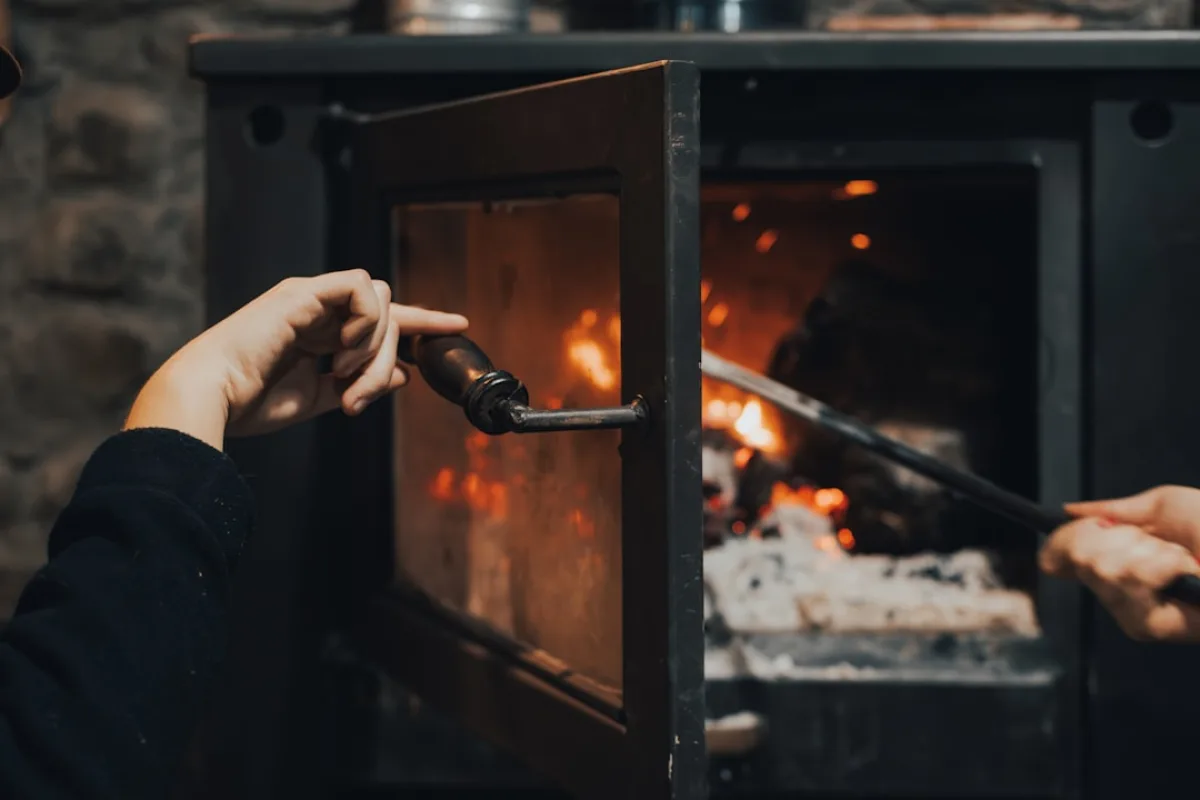
Wood Burning Stoves in Listed and Historic Buildings: What Businesses Need to Know
Graham Alderton · 29 Jun 2026
Historic and listed buildings present some of the most rewarding commercial stove installations we carry out. A well-chosen stove suits these spaces beautifully, complementing original fireplaces and period architecture while providing genuine, usable heat. However, the process of getting there involves more layers of compliance than a standard commercial project, and it pays to understand what those layers are before you begin.
Whether you run a hotel, a restaurant, a heritage visitor attraction, or any other business operating from a listed or historic building, our team can guide you through the full process, from the initial site survey right through to a compliant, commissioned installation. You can find out more about our approach on our commercial installation service page.
Listed Building Consent and Planning Permission
If your building is listed, any work that affects its character, including internal alterations, requires listed building consent from your local planning authority. Installing a stove and flue system almost always counts as an alteration, even if the works are largely internal. This applies regardless of listing grade, so a Grade II listed building carries the same consent requirement as a Grade I or Grade II* structure.
Planning permission may also be required if external flue work is visible from a public road or if the building sits within a conservation area. Our team will help you identify which consents apply to your specific premises before any installation work begins.
What the application process involves
Your local authority may ask for drawings showing the proposed flue route, details of the stove model and its dimensions, a heritage impact statement explaining how the installation preserves the character of the building, and in some cases a structural engineer's report if the existing chimney stack or breast is being used or modified. Officers from the local authority's heritage team will assess the application, and turnaround times vary considerably between councils.
We strongly recommend engaging with the planning authority at pre-application stage where possible. It avoids surprises and, in our experience, produces better outcomes for everyone involved.
Building Regulations and HETAS Compliance
Listed building consent is separate from building regulations approval. Any solid fuel appliance installation in a commercial setting must comply with Approved Document J of the Building Regulations, which covers combustion appliances and fuel storage. HETAS-registered installers like our team can self-certify the work, notifying the local building control body on your behalf and issuing the relevant certificate on completion.
For commercial premises, there are additional considerations around hearth construction, non-combustible materials, and minimum clearances to combustible structures. Where original timber floors, panelling, or decorative features are close to the intended stove position, careful design is essential. Our installers carry out a full site assessment before specifying any appliance or flue components, so nothing is left to chance. You can read more about what our commercial servicing and installation team covers in practice.
Smoke control zones
Many town and city centres in the UK are designated smoke control areas under the Clean Air Act. If your listed building falls within one of these zones, you must use an Exempt appliance, which is a stove type that has been independently tested and approved for use in smoke control areas. We only specify appliances that are suitable for your location, and we check smoke control zone status as a routine part of our pre-installation survey. Burning unauthorised fuel in a smoke control area carries a fine, so this is not a step to overlook.
Flue Systems in Historic Buildings
The flue is often the most complex aspect of a listed building installation. Original chimneys are frequently oversized for a modern stove's requirements, poorly insulated, and sometimes structurally compromised after years of low use. They may also contain historic fabric, such as lime render, clay pots, or decorative corbelling, that the planning authority will wish to preserve.
Flexible liner systems
In most cases, we install a flexible stainless-steel liner through the existing chimney flue. This provides a correctly sized, insulated, and sealed passage for combustion gases without requiring significant structural intervention. The liner is fixed at the base with a closure plate and connected at the top with a suitable terminal, maintaining the external appearance of the stack. For many listed buildings, this approach satisfies both the building regulations requirement for a sound flue and the heritage requirement to minimise impact on historic fabric.
Where the existing chimney cannot be used
Some historic buildings have no usable chimney at all, or the route is obstructed. In these cases, a twin-wall insulated flue system can often be routed internally, concealed within existing service voids or purpose-built casings designed to be sympathetic to the building's interior. The planning authority will need to be satisfied with the solution, and this is something our team designs in consultation with the heritage officer and, where needed, a conservation architect.
Choosing the Right Stove for a Historic Commercial Space
The stove itself must be sized correctly for the space. Historic buildings are often harder to heat than modern equivalents, with higher ceilings, solid stone or brick walls, and more air movement through original joinery. Undersizing the appliance means the stove will be run flat out most of the time, which shortens its life and increases the risk of flue deposits. Oversizing leads to slumbering, poor combustion, and similar problems.
Our team calculates heat output requirements based on the actual dimensions and construction of your building, not a generic formula. For larger commercial premises or for businesses wanting to use wood heating across more of their operation, our biomass and boiler stove options may offer a more efficient solution alongside or instead of a room heater.
Visually, the stove should sit comfortably within the character of the space. Many of our clients in historic buildings choose traditional cast iron models with clean lines that complement period interiors without looking out of place. We will always work with you on aesthetics as well as performance.
Ongoing Maintenance in Listed and Historic Buildings
Once your installation is complete and certified, regular maintenance is essential. Chimney sweeping should be carried out at least once a year for most commercial stoves, and more frequently where the stove is in heavy use. In historic buildings, keeping the flue clean also protects the surrounding fabric from the effects of acidic condensate and soot.
Any remedial work to the stove, liner, or chimney in a listed building should be carried out by an experienced installer and, depending on the scope, may require a further notification or consent. Our team can advise on what triggers a formal process and what falls within routine maintenance.
If you are planning a stove installation in a listed or historic commercial building and you are not sure where to start, we are happy to carry out an initial assessment and talk you through the consent and compliance requirements that apply to your premises. Visit our commercial stoves page to get in touch with our team.
Related advice
Stove Output, Fuel and Compliance: A Practical Guide for Business Owners
From calculating the right heat output for your commercial space to understanding HETAS regulations and clean air zone rules, here is what every business owner needs to know before installing a wood burning stove.
24 Sep 2026
Read More
How to Create a Cosy Atmosphere in Your Commercial Space with a Wood Burning Stove
A well-chosen and correctly installed wood burning stove does far more than heat a commercial space. It shapes how guests feel the moment they walk through the door. Here is how to get it right.
23 Sep 2026
Read More
Firewood for Hospitality Venues: Fuel Quality, Storage and Keeping Supply Consistent
Running a pub, restaurant or hotel with a wood burning stove means thinking carefully about fuel. Here is our practical guide to choosing the right firewood, storing it properly and keeping your supply reliable all year round.
20 Sep 2026
Read More