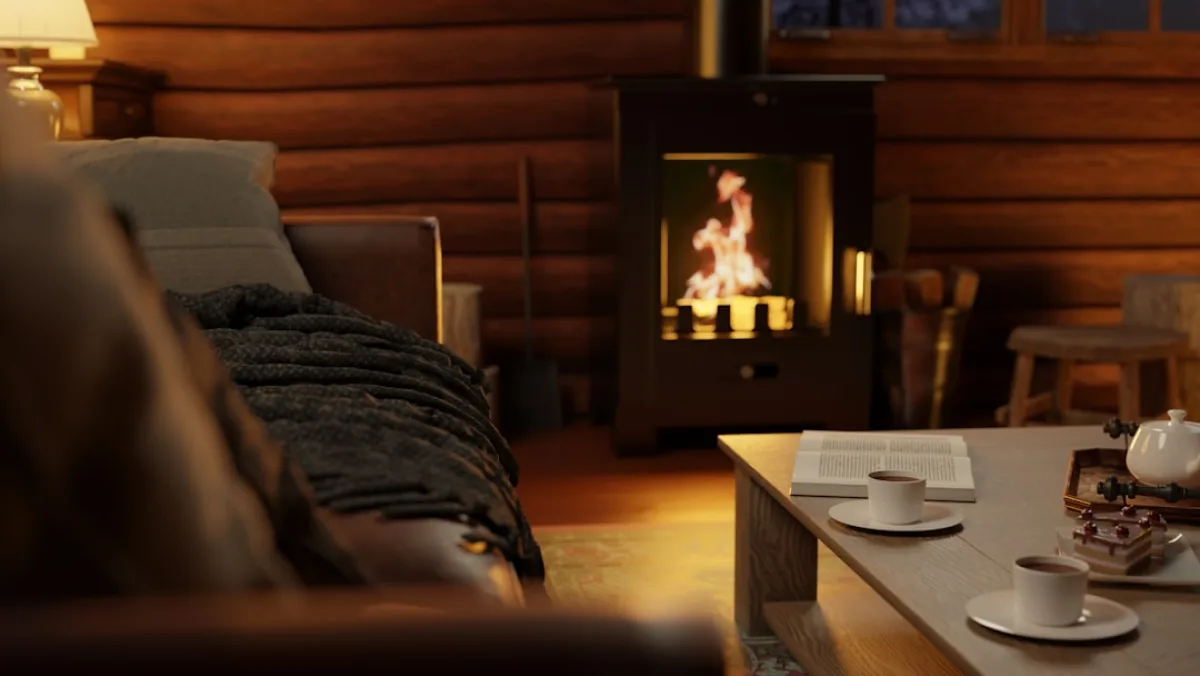
Carbon Monoxide Safety and Your Wood Burning Stove
Colin Whitmore · 17 Jun 2026
A wood burning stove is one of the most satisfying ways to heat a home. The warmth is real, the atmosphere is unbeatable, and running costs can be kept well under control. But alongside all of that, there is one safety matter that we always address head-on with our customers: carbon monoxide.
Carbon monoxide, often shortened to CO, is produced whenever any fuel burns. In a properly installed, well-maintained stove with a sound flue, those gases travel safely out of your home. When something goes wrong, they can spill into the room instead. Because CO has no colour or smell, you cannot detect it without the right equipment. That is why we treat it as a priority on every job we carry out.
What Causes Carbon Monoxide to Enter a Room?
CO build-up around a stove is almost always the result of one or more of the following issues.
A Blocked or Damaged Flue
Soot, debris, bird nests, and even collapsed liner sections can restrict the draw of your chimney. When gases cannot escape freely, they find another way out, and that usually means back into the room. Our stove servicing and sweeping appointments include a full flue check for exactly this reason.
A Poorly Fitted Stove or Liner
If joints in the flue system are not properly sealed, combustion gases can leak before they ever reach the chimney pot. This is one of the strongest arguments for using a qualified, HETAS-registered installation team. HETAS certification means our work meets the standards set out in building regulations, and every installation we complete is backed by a certificate you can rely on.
Insufficient Air Supply
A stove needs a steady supply of fresh air to burn cleanly. In very well-insulated modern homes, this can sometimes be restricted. We always assess ventilation requirements before we fit a stove, and we advise on any additional provision that may be needed.
Wet or Inappropriate Fuel
Burning wet wood or treated timber causes incomplete combustion. That means more CO and more tar depositing in your flue. Always use seasoned or kiln-dried wood with a moisture content below 20 per cent, and stick to fuels approved for your appliance.
Carbon Monoxide Alarms: What You Need to Know
Current building regulations in England require a carbon monoxide alarm to be fitted in any room where a new or replacement solid fuel appliance is installed. Scotland, Wales, and Northern Ireland have similar requirements. We fit alarms as part of our standard installation process, so you are covered from the moment your stove is first lit.
Choosing the Right Alarm
Look for an alarm that meets British Standard EN 50291. Battery-operated units are acceptable, but mains-powered alarms with a battery backup offer an extra layer of protection. Place the alarm at head height, roughly one to three metres from the stove, away from doors and windows where draughts could interfere with the sensor.
Testing and Replacing Your Alarm
- Test the alarm using the test button every week during the burning season.
- Replace the unit in line with the manufacturer's guidance, which is typically every five to seven years.
- Never paint over or cover the alarm casing.
- Do not position it directly above the stove or in a corner where air circulation is poor.
What to Do if the Alarm Sounds
- Get everyone, including pets, out of the property immediately.
- Leave the door open as you exit to let fresh air in.
- Call 999 or the Gas Emergency Service on 0800 111 999 once you are outside.
- Do not re-enter until the property has been declared safe.
- Contact us to arrange an inspection of your stove and flue before using the appliance again.
How Regular Servicing Reduces Your Risk
The single most effective thing you can do to reduce CO risk, beyond fitting a working alarm, is to have your stove and flue swept and inspected every year. For stoves used daily through a long burning season, twice a year is better still.
Our servicing appointments cover the full system: the firebox, baffle plate, door seals, rope gaskets, and the flue liner from bottom to top. We check for soot build-up, blockages, cracks in the liner, and any deterioration in the joints. If we spot something that needs attention, we tell you plainly and sort it out before it becomes a hazard.
Rope gaskets on the door deserve a special mention. When they wear out, the stove draws air from the wrong places, combustion quality drops, and CO output rises. It is a quick, inexpensive fix that makes a real difference to safety and efficiency.
Installation Quality Is the Foundation of Safety
Everything we have covered above matters more when the installation underneath it is solid. A stove fitted without proper attention to flue sizing, liner specification, and hearth clearances is a stove that will cause problems down the line.
Our team handles the full process, from chimney lining and flue installation through to the final fire-up and handover. We work to building regulations throughout, and we do not cut corners on the components we use or the time we take to do the job properly.
If you are based in Norfolk, Suffolk, or elsewhere across the UK, you can check our coverage area to see whether we serve your location. We are happy to talk through your installation or servicing needs before you commit to anything.
Our advice: fit a working CO alarm before you light your stove for the first time, book an annual service without fail, and use only the right fuel for your appliance. Those three habits will keep your home safe season after season.
Related advice
Stove Output, Fuel and Compliance: A Practical Guide for Business Owners
From calculating the right heat output for your commercial space to understanding HETAS regulations and clean air zone rules, here is what every business owner needs to know before installing a wood burning stove.
24 Sep 2026
Read More
How to Create a Cosy Atmosphere in Your Commercial Space with a Wood Burning Stove
A well-chosen and correctly installed wood burning stove does far more than heat a commercial space. It shapes how guests feel the moment they walk through the door. Here is how to get it right.
23 Sep 2026
Read More
Firewood for Hospitality Venues: Fuel Quality, Storage and Keeping Supply Consistent
Running a pub, restaurant or hotel with a wood burning stove means thinking carefully about fuel. Here is our practical guide to choosing the right firewood, storing it properly and keeping your supply reliable all year round.
20 Sep 2026
Read More