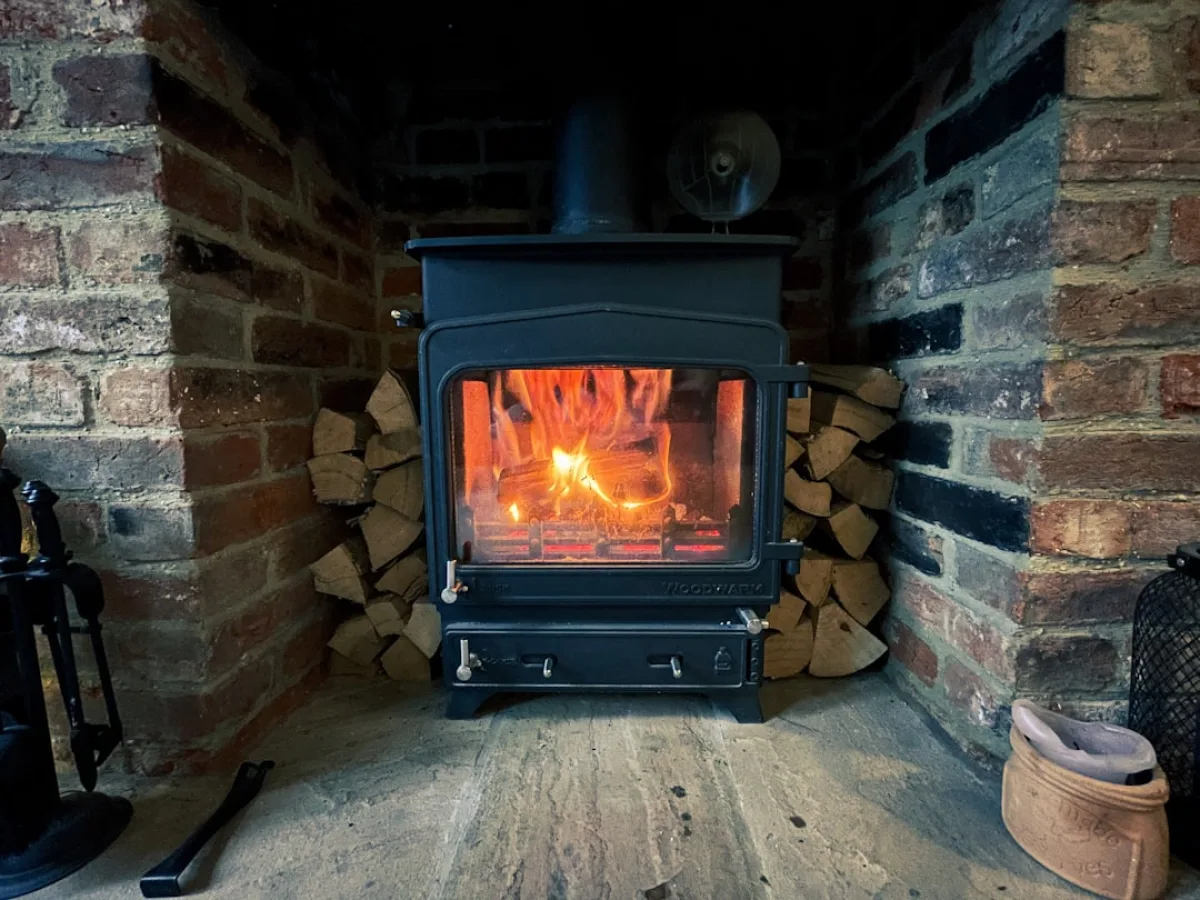
How a Wood Burning Stove Can Reduce Heating Costs for Hospitality Businesses
Graham Alderton · 9 Jul 2026
Energy costs are one of the biggest ongoing pressures for hospitality businesses across the UK. Whether you run a country pub, a boutique hotel, a rural restaurant or a café with a terrace, keeping your space warm through the colder months is non-negotiable. The question is how you do it without watching your margins disappear into the boiler room.
A well-specified and correctly installed wood burning stove can make a genuine difference to your heating bills, while also adding the kind of atmosphere that keeps guests coming back. Our team installs commercial stoves in hospitality venues of all sizes, and in this guide we share what you need to know about the costs, the savings and the practicalities.
Why Hospitality Businesses Are Turning to Wood Burning Stoves
Gas and electricity prices have been volatile for several years. Many hospitality operators who relied entirely on central heating systems have found themselves exposed to those fluctuations in ways that are difficult to plan around. Solid fuel heating, by contrast, gives you a degree of control over your fuel costs, particularly if you can source seasoned hardwood locally or in bulk.
Beyond the financial case, there is a clear commercial benefit to the look and feel a stove brings. A well-placed cast iron or steel stove in a dining room or bar area creates a focal point that guests genuinely value. That has a direct effect on dwell time, covers per sitting and returning custom.
Our installers work with venues that have made solid fuel heating a core part of their offer, not just a backup heat source. Done properly, it becomes part of the identity of the place.
Understanding the Running Costs of a Commercial Wood Burning Stove
Before we talk about savings, it helps to understand how running costs break down for a commercial installation.
Fuel Costs
The main variable is the price of your wood. Kiln-dried hardwood is the most efficient option, burning hotter and cleaner than unseasoned wood. The volume you need depends on the output of your stove, how many hours per day it runs, and how well insulated your space is.
Buying in bulk, particularly at the end of summer before the winter demand peak, typically brings the cost per cubic metre down considerably. Some rural venues are also able to source timber from local estates or farms, which can reduce costs further.
Stove Output and Space Size
Getting the output right is critical. An undersized stove will struggle to heat the space and will be run flat out all day, burning through fuel inefficiently. An oversized stove in a small room will either overheat guests or be damped down constantly, which is bad for the flue and for combustion efficiency.
Our team assesses the volume of the space, ceiling height, existing insulation and the number of air changes per hour before recommending an output rating. For a busy dining room you might need 10 to 15 kW or more. For a boutique hotel lounge, something in the 5 to 8 kW range may be sufficient. Getting this right from the start is where the real savings come from.
You can find more information about our approach to commercial stove installation, including what to expect from the survey and specification process.
Maintenance and Servicing
A commercial stove that is used daily needs a regular servicing schedule. Our recommendation for heavily used commercial installations is at least one professional service per year, ideally at the end of the burning season. This covers the flue, the rope seals, the firebricks and the baffle plate, as well as any wear on moving parts.
Staying on top of servicing keeps combustion efficiency high, which directly affects how much fuel you burn. A stove with a compromised baffle or a partially blocked flue will burn more wood for less heat output. Our commercial servicing team handles regular contracts for venues across the UK, so you are not having to chase tradespeople every year.
Commercial Stove Installation: Regulations and Compliance
This is the area where hospitality businesses most often come unstuck. A domestic stove installation is relatively straightforward. A commercial installation involves additional layers of compliance that have to be addressed properly before you light a single fire.
Building Regulations and HETAS
All solid fuel appliances installed in commercial premises in England and Wales must comply with Approved Document J of the Building Regulations. This covers the combustion appliance itself, the hearth, the fireplace recess where applicable, and the flue system. Our installers are HETAS registered, which means we can self-certify installations rather than requiring you to go through your local authority building control separately.
Smoke Control Zones
If your premises is in a designated smoke control area, you are legally required to use only Defra-approved exempt appliances. This applies to a significant proportion of town and city centre hospitality businesses. We check smoke control zone status as part of every site survey and only recommend appliances that are appropriate for your location. Burning unauthorised fuel or running a non-exempt appliance in a smoke control zone is a criminal offence under the Clean Air Act 1993, so this is not something to overlook.
Commercial Flue Requirements
A commercial flue installation is more involved than a residential one. Insulated twin-wall flue systems are standard for most commercial applications, particularly where the flue passes through voids, roof spaces or multiple floors. Termination height above the roofline, proximity to windows and ventilation openings, and the structural method of support all have to meet the relevant standards. Our team designs and installs complete flue systems, not just the stove itself.
Ventilation
Commercial premises often have mechanical ventilation systems, extraction hoods in kitchens, or HVAC that can create negative pressure in the building. This affects how a solid fuel appliance draws. We assess ventilation as part of every commercial survey to make sure there is adequate air supply for safe combustion.
Return on Investment for Hospitality Venues
We are careful not to make specific financial promises, because every venue is different and fuel prices change. What we can say is that the return on investment for a commercial wood burning stove in a hospitality setting typically comes from three directions.
Direct Heating Cost Reduction
Where a stove takes on the heating load in a dining room or bar area that would otherwise be handled by a gas or electric system, the fuel cost comparison often favours wood, particularly if you are buying in bulk and using the stove as a primary heat source rather than a supplement.
Reduced Central Heating Demand
In many venues, the stove heats the main customer-facing area effectively enough that the central heating thermostat can be set lower, or that zone can be turned off entirely during opening hours. The saving across a six-month heating season can be significant.
Commercial and Hospitality Value
This is harder to put a number on, but venues with stoves consistently report that guests mention the stove positively, stay longer and return more often. For a restaurant, that translates to covers. For a hotel, it translates to bookings. For a pub, it is footfall on cold evenings. Our commercial stoves page covers more about commercial stove solutions across different venue types.
Stove Options for Different Hospitality Settings
Pubs and Bars
High footfall, long opening hours and the need for a reliable heat source make traditional cast iron wood burners or multi-fuel stoves a popular choice. Output in the 8 to 15 kW range is common. The stove also needs to look the part, as it is front of house.
Restaurants and Cafés
Air quality is important here. Correctly installed and properly maintained stoves with tight door seals and efficient combustion chambers produce minimal visible smoke and no indoor air quality issues. Approved Document J compliance ensures the flue draws properly and combustion gases are fully evacuated.
Hotels and Guest Houses
Lounge areas, reception spaces and dining rooms are all good candidates. Some boutique hotels also install stoves in individual rooms or suites as a premium feature. Our team handles multi-room and multi-flue installations and can advise on the most efficient configuration for your property layout.
Holiday Lets and Rental Properties
Holiday lets are a slightly different category because the commercial use is intermittent but the compliance requirements are still significant. We have a dedicated service for holiday let and rental stove installation that covers everything from specification through to certification.
Getting Started with a Commercial Stove Installation
The first step is always a proper site survey. There is no shortcut to getting a commercial installation right, and an accurate assessment of the space, the flue route, the chimney or the external wall penetration, and the local regulatory requirements is the foundation of everything that follows.
Our team covers premises across the UK. If you want to check whether we operate in your area, our locations page has full details of where we work.
We handle the complete installation from specification and supply through to commissioning and certification. There are no third parties involved. Our installers do the work, and we stand behind it.
If you are running a hospitality business and want to understand what a wood burning stove could do for your heating costs and your customer experience, get in touch with our team. We will start with a proper survey and give you a realistic picture of what is involved.
Related advice
Stove Output, Fuel and Compliance: A Practical Guide for Business Owners
From calculating the right heat output for your commercial space to understanding HETAS regulations and clean air zone rules, here is what every business owner needs to know before installing a wood burning stove.
24 Sep 2026
Read More
How to Create a Cosy Atmosphere in Your Commercial Space with a Wood Burning Stove
A well-chosen and correctly installed wood burning stove does far more than heat a commercial space. It shapes how guests feel the moment they walk through the door. Here is how to get it right.
23 Sep 2026
Read More
Firewood for Hospitality Venues: Fuel Quality, Storage and Keeping Supply Consistent
Running a pub, restaurant or hotel with a wood burning stove means thinking carefully about fuel. Here is our practical guide to choosing the right firewood, storing it properly and keeping your supply reliable all year round.
20 Sep 2026
Read More