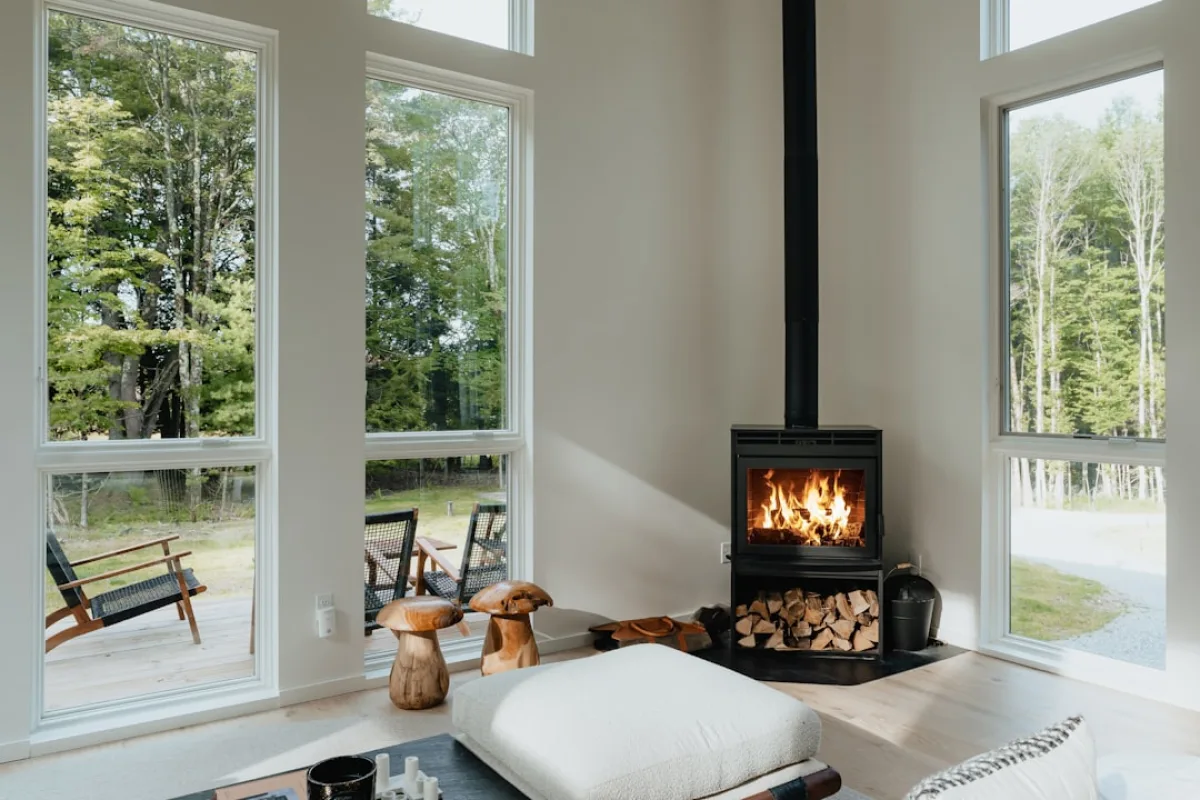
How to Choose the Right Size Wood Burning Stove for Your Room
Colin Whitmore · 23 Jun 2026
One of the most common mistakes people make when buying a wood burning stove is choosing the wrong output for their room. It is easy to assume that a bigger stove means more heat, but that is not always the right approach. A stove that produces far more heat than your room needs will force you to run it at a low burn rate, which reduces efficiency, increases creosote build-up in the flue, and shortens the life of the appliance. Our team always takes room size seriously before recommending a stove, and we want to help you understand the thinking behind it.
Understanding Stove Output and What It Means
Stove output is measured in kilowatts, usually written as kW. This figure tells you how much heat the stove can produce at its rated performance. A 5 kW stove, for example, is well suited to a medium-sized living room in a reasonably well-insulated home. A 3 kW stove might suit a smaller room or a room that already has another heat source. A 8 kW or higher output is better reserved for large open-plan spaces or poorly insulated older properties.
The challenge is that the right output depends on more than just floor area. You also need to think about ceiling height, the number of external walls, how well the room is insulated, whether there are large windows, and how draughty the property is overall. A Victorian terrace with solid stone walls and single glazing will need more output than a modern new-build of the same floor size.
How to Estimate the Output You Need
A rough starting point is to calculate the volume of your room in cubic metres. Multiply the length by the width by the height. Once you have that figure, you can work out the required output using a simple rule of thumb:
- For a well-insulated modern room: divide the volume by 25 to get a guide kW figure
- For an average UK home built before the 1990s: divide by around 20
- For an older or poorly insulated property: divide by 14 to 16
So a living room that is 5 metres long, 4 metres wide, and 2.4 metres high has a volume of 48 cubic metres. In a well-insulated home, that suggests roughly 1.9 kW, but most people factor in comfort margin and real-world heat loss, so a 4 kW or 5 kW stove would be a sensible choice. Our installers go through this calculation with every customer before any purchase is made.
If you have an open-plan kitchen and living area, or a room that connects to a hallway, you will need to account for that additional volume too. Heat does not stay neatly in one zone.
The Role of Insulation and Building Type
Modern homes built to current building regulations tend to hold heat well. Cavity wall insulation, double glazing, and well-sealed doors all reduce the demand on your stove. If your home has been upgraded with loft insulation and draught-proofing, you may find a lower output stove is perfectly adequate.
Older homes are a different matter. Solid stone or brick walls, original timber sash windows, and high ceilings all increase heat loss. In those properties, we would lean towards the higher end of the estimated output range. It is worth noting that in some listed buildings or conservation areas, there may also be planning considerations to work through before installation. Our team handles all of that as part of our stove supply and installation service.
Smoke Control Zones and Output Choices
If you live in a smoke control area, you are required to use a DEFRA-exempt appliance. This does not change the output calculation, but it does limit which stoves are available to you. Most modern stoves carry DEFRA approval, and our team will always confirm compliance before recommending any model. You can read more about this on our frequently asked questions page.
Avoiding Common Sizing Mistakes
The most frequent error we see is people choosing a stove based on appearance rather than output. A beautiful large cast iron stove might look perfect in a room, but if the output is 10 kW and the room only needs 4 kW, you will end up running the stove in a partially starved state. This means incomplete combustion, more smoke, and faster flue contamination. It also means more frequent stove servicing and sweeping to keep the system safe.
The opposite problem, undersizing, means the stove runs flat out just to take the edge off the cold. Fuel consumption goes up, and you never quite reach the level of comfort you were hoping for.
A few other points worth keeping in mind:
- Do not rely solely on a stove to heat your whole home unless it is genuinely designed for that purpose
- If you are heating an open-plan space, consider whether a higher output multi-fuel stove might give you more flexibility over fuel choice and running cost
- Always check that your flue and chimney can handle the stove you choose. A liner sized for a 5 kW stove may not be appropriate for an 8 kW model without chimney lining work
Getting the Right Advice Before You Buy
We always recommend speaking to our team before committing to a stove. Output is just one part of the picture. Our installers will also look at your chimney or flue arrangement, the room layout, whether you are in a smoke control zone, and what fuel you plan to use. All of this affects which stove is right for you.
If you would like to find out whether we cover your area, take a look at our locations page. We work across a wide range of areas in the UK and our team is happy to talk through your requirements before any visit is arranged.
Getting the sizing right from the start saves money, reduces maintenance, and means you get the most from your stove for years to come. It is one of those decisions that is well worth taking time over.
Related advice
Stove Output, Fuel and Compliance: A Practical Guide for Business Owners
From calculating the right heat output for your commercial space to understanding HETAS regulations and clean air zone rules, here is what every business owner needs to know before installing a wood burning stove.
24 Sep 2026
Read More
How to Create a Cosy Atmosphere in Your Commercial Space with a Wood Burning Stove
A well-chosen and correctly installed wood burning stove does far more than heat a commercial space. It shapes how guests feel the moment they walk through the door. Here is how to get it right.
23 Sep 2026
Read More
Firewood for Hospitality Venues: Fuel Quality, Storage and Keeping Supply Consistent
Running a pub, restaurant or hotel with a wood burning stove means thinking carefully about fuel. Here is our practical guide to choosing the right firewood, storing it properly and keeping your supply reliable all year round.
20 Sep 2026
Read More