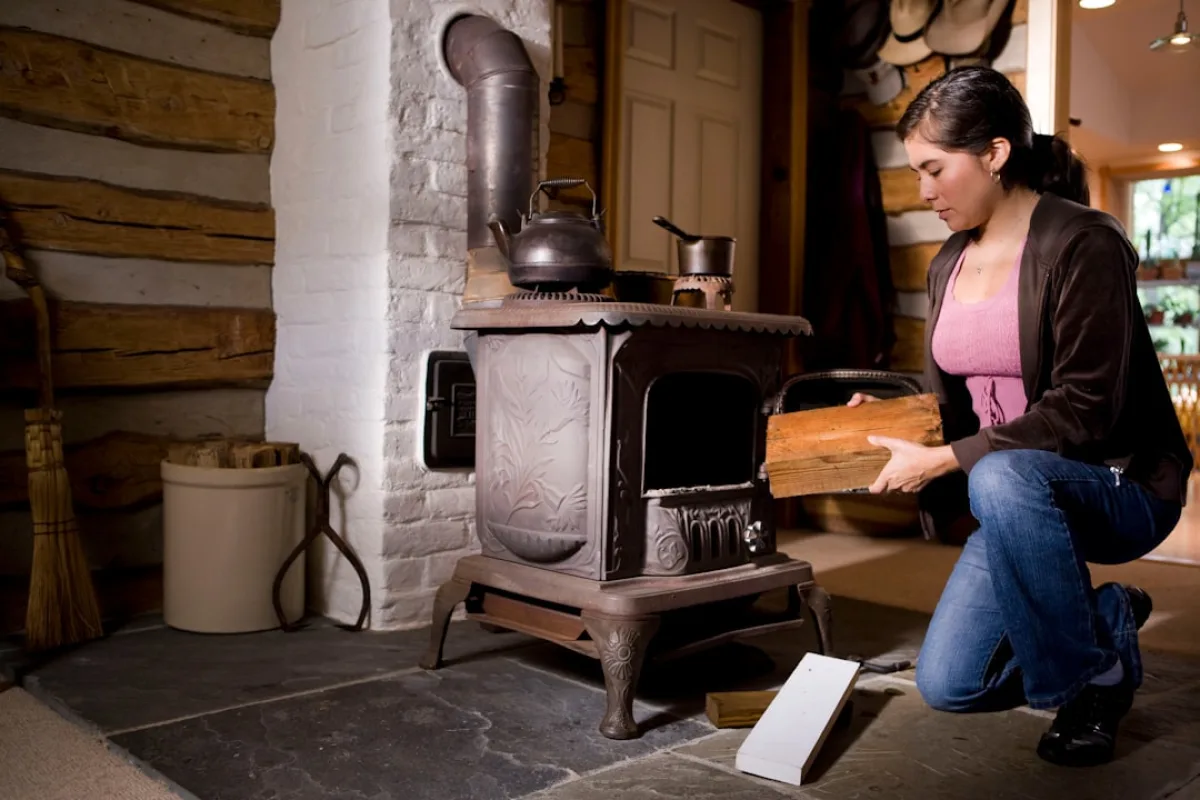
Why Kiln-Dried Logs Burn Better in Your Wood Burning Stove
Colin Whitmore · 14 Jun 2026
If you own a wood burning stove, the fuel you put into it matters just as much as the appliance itself. We see it time and again: a well-installed stove underperforming simply because the owner is burning wood with too much moisture in it. Kiln-dried logs have become the go-to choice for stove owners across the UK, and for very good reason.
What Makes Kiln-Dried Logs Different?
Kiln-dried logs are timber that has been dried in a controlled heated environment until the moisture content drops to around 20% or below. Freshly cut or 'green' wood can contain moisture levels of 50% or more. Even wood that has been left to season outdoors for a year or two may still hold 25-30% moisture depending on how it was stored.
When you burn wood with high moisture content, a significant portion of the heat energy produced by the fire is spent evaporating that water rather than warming your room. You end up with less heat output, more smoke, and a stove that struggles to reach its operating temperature.
Kiln-dried logs light more easily, reach temperature faster, and produce a cleaner, more consistent flame. That means your stove works the way it was designed to work.
The Impact on Efficiency and Stove Health
Burning wet wood does not just reduce the heat you feel in the room. It also causes a build-up of creosote and tar deposits inside your flue and chimney liner. These deposits are flammable and are one of the leading causes of chimney fires. They also make sweeping more difficult and more expensive.
A stove running on properly dried fuel will produce far less residue. Your flue liner stays cleaner, and your annual stove servicing and sweeping appointment will be more straightforward. Over time, this protects your investment and keeps running costs down.
There is also the matter of air quality. The UK government's Ready to Burn scheme was introduced to encourage the use of dry wood with moisture content at or below 20%. Using kiln-dried logs that carry the Ready to Burn accreditation helps you stay on the right side of restrictions, particularly if you live in a smoke control zone. In those areas, you are generally required to use a DEFRA-exempt appliance and approved fuel. If you are unsure whether your stove qualifies, our frequently asked questions page covers smoke control zone rules in detail.
How to Spot Good Quality Kiln-Dried Logs
Not every bag labelled 'kiln-dried' is equal. Here is what to look for:
- Moisture meter reading: A reading of 20% or below is what you are aiming for. Many reputable suppliers will provide this information, and a basic moisture meter costs very little and is worth keeping to hand.
- Weight: Dry logs feel noticeably lighter than wet ones of the same size. If a bag feels very heavy for its volume, the wood is likely still holding moisture.
- Appearance: Well-dried wood tends to show small cracks or splits at the end grain. The surface may look slightly grey rather than bright and fresh.
- Sound: Knock two pieces together. Dry wood produces a sharp, hollow sound. Wet wood gives a dull thud.
- Ready to Burn accreditation: Look for the government-backed logo on packaging. It guarantees the fuel meets the moisture standard.
Matching Your Fuel to Your Stove
Wood burning stoves are designed to burn wood only. If you have a multi-fuel stove, you have more flexibility and can also burn certain approved solid fuels such as smokeless coal. However, even on a multi-fuel appliance, the quality of your wood still matters. Kiln-dried hardwoods such as oak, ash, and birch are among the best choices for high heat output and long burn times.
Softwoods like pine can be used when kiln-dried, but they burn faster and produce more resin residue. They are better suited to getting a fire going than sustaining it over a long evening.
Whatever fuel you choose, make sure your stove and flue system are in good working order before the burning season begins. Our team carries out full stove servicing and chimney sweeping across many parts of the UK. If you are in the East of England, you can find out more about our coverage on our locations page.
A Simple Change That Makes a Real Difference
Switching to kiln-dried logs is one of the easiest and most cost-effective upgrades any stove owner can make. Better heat output, a cleaner flue, fewer call-outs, and a stove that simply performs as it should. If you are setting up a stove for the first time or thinking about getting one installed, our team is happy to talk you through fuel choices as part of the process. Take a look at our stove supply and installation service to see how we can help from start to finish.
Related advice

Stove Output, Fuel and Compliance: A Practical Guide for Business Owners
From calculating the right heat output for your commercial space to understanding HETAS regulations and clean air zone rules, here is what every business owner needs to know before installing a wood burning stove.
24 Sep 2026
Read More
How to Create a Cosy Atmosphere in Your Commercial Space with a Wood Burning Stove
A well-chosen and correctly installed wood burning stove does far more than heat a commercial space. It shapes how guests feel the moment they walk through the door. Here is how to get it right.
23 Sep 2026
Read More
Firewood for Hospitality Venues: Fuel Quality, Storage and Keeping Supply Consistent
Running a pub, restaurant or hotel with a wood burning stove means thinking carefully about fuel. Here is our practical guide to choosing the right firewood, storing it properly and keeping your supply reliable all year round.
20 Sep 2026
Read More